
August Reads ... and Listens

Open Humanities is the newsletter of Open Humanities Press (OHP), a radical, scholar-led, open access publisher of critical and cultural theory. It explores what it means to create, publish and circulate research and scholarship at a moment marked by the erosion of liberal democracies, the unraveling of the neoliberal world order, the increasing marketisation of knowledge and education, the hollowing out of the humanities, and the growing influence of AI on how information is produced, discovered and shared.
If this newsletter was forwarded to you, you can subscribe here to receive future editions.
Like Open Humanities Press itself, the newsletter is open and free, and will remain so.
Want to continue reading? All previous editions of Open Humanities are available here, including ‘Who Will Find Us?: What Happens to Open Access After Search?’.
Open Humanities Press - New Book
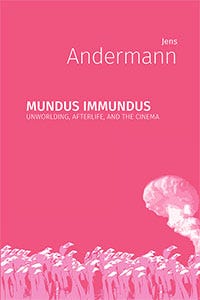
Mundus Immundus: Unworlding, Afterlife, and the Cinema
by Jens Andermann
How is our vanishing world experienced and cathected into affective circuits of fear and enjoyment, mourning and resistance? To consider what Hannah Arendt calls Entweltlichung, or loss of world, this book turns to cinema as an alternate form of thinking (in) the present. Mundus immundus — a central figure in Augustinian theology — offers a key for addressing the clashes and entanglements between the two histories that emplot our catastrophic present: the annihilation, in real time, of a habitable planet, and the becoming-fascist of late-capitalist subjectivities as our way of coexisting with and of enjoying the world’s unworlding.
But rather than to industrial cinema’s apocalyptic end-tales and their grand allegories of collapse and resurgence of extractive capitalism and white supremacy, Andermann turns to the neo-regionalist cinemas of the Global South to study unworlding and its afterlives as an interruption or withdrawal of cinematic worldmaking, forcing viewers to “stay with the trouble.” In dialogue with films by Pedro Costa, Lucrecia Martel, Kléber Mendonça Filho, Laura Citarella, Flora Gomes, Lisandro Alonso, and Adirley Queirós, among others, Mundus Immundus inquires about disaster by invoking some of its most illustrious names: Capitalocene (the relationship of mutual devastation that subsumes bodies and environments), Negrocene (the racialized denial of world that has sustained capitalism since its origins), and Thanatocene (the imbrication between technologies of war and extraction, and of these with forms of spectacle and enjoyment founded on destructiveness). But the book also explores the poetics and politics of afterlife — of survivance, re-existence, re-becoming Indigenous — and their manifestations in contemporary cinemas of re-enactment and re-performance.
Author Bio
Jens Andermann is David B. Kriser Professor in the Humanities at New York University. He is an editor of the Journal of Latin American Cultural Studies and of the book series SubAtlantic: Latin American, Caribbean, and Luso-African Ecologies (De Gruyter-Brill). He writes about art, literature, film, architecture and politics in Latin America and Luso-Africa. His books in English include Entranced Earth: Art, Extractivism, and the End of Landscape (Northwestern University Press, 2023), New Argentine Cinema (I. B. Tauris, 2011), and The Optic of the State. Visuality and Power in Argentina and Brazil (Pittsburgh 2007), and as co-editor, Handbook of Latin American Environmental Aesthetics (De Gruyter, 2023); Natura. Environmental Aesthetics After Landscape (Diaphanes, 2018), and Latin American Cultural Studies: A Reader (Routledge, 2018).
Mundus immundus is part of the CCC2 Irreversibility series, edited by Tom Cohen and Claire Colebrook.
Open Humanities Summer 2026 Playlist
Specially curated for Open Humanities by Mark Amerika.
Bitchin Bajas - Skylarking
Aerial M - Dazed and Awake
Aerial M - Vivea-1
Chad Mossholder - Tunneling Under the Structure Till iI Falls
Amerika / Mossholder - Another Medium
Stereolab - Esemplastic Creeping Eruption
Please share your own playlists. We’d love to listen to them.
A Recently Published Title You May Have Missed
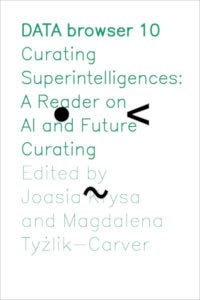
Curating Superintelligences: A Reader on AI and Future Curating
edited by Joasia Krysa and Magdalena Tyżlik-Carver
This volume addresses a shift in contemporary curatorial field largely attributed to the ubiquitous presence of information and computational technologies, the rapid developments in Artificial Intelligence, and the reclaiming of subaltern knowledges. It poses questions about the implications of these “super-intelligences” for contemporary art and culture, and the new possibilities for curatorial practice and its future forms.
What are the lessons to be learnt? What can the practice of curating learn from AI, what can AI learn from curating, and how can both unlearn knowledges derived from undemocratic, centralised and colonialist frameworks of humans and machines? What kind of future infrastructures and curatorial practices can develop from the coming together of diverse human and non-human entities? What new kinds of curatorial knowledge can emerge from desires to reclaim marginalised categories such as automation, machine, nature, women, black and people of colour, indigenous people, LGBTQIA, from their usual positions in knowledge taxonomies as epistemological objects of study rather than curating subjects? What new understandings, relationships, and new entities can emerge once open to the possibilities afforded by expanded human and machine epistemologies?
The book is part reader and part new commissions, compiled by Joasia Krysa and Magdalena Tyżlik-Carver, with contributions by Dominik Bönisch, CROSSLUCID, Marialaura Ghidini, Olga Goriunova, Francis Hunger, Leonardo Impett, Victoria Ivanova, Eva Jäger, Nathan Jones, Murad Khan, Nora N. Khan, Joasia Krysa, Jason Edward Lewis (Kanaka Maoli/Samoan), Mikhel Proulx, Nicolas Malevé, Gabriel Menotti, Lívia Nolasco-Rózsás, Alasdair Milne, Christiane Paul, Helen V. Pritchard, Tom Schofield, Skawennati (Kanien’kehá:ka), Sam Skinner, Katrina Sluis, Winnie Soon, Gaia Tedone, Suzanne Treister, Magdalena Tyżlik-Carver, Elvia Vasconcelos, Ashley Lee Wong, Mi You, Martin Zeilinger, Gary Zhexi Zhang.
The book expands on Liverpool Biennial’s journal Stages 09: The Next Biennial Should be Curated by a Machine, edited by Joasia Krysa and Manuela Moscoso on the occasion of Liverpool Biennial 2021, and ideas first introduced in DATA Browser 03: Curating Immateriality (2006) edited by Joasia Krysa.
Editor Bios
Joasia Krysa is Professor of Exhibition Research and Director of the Institute of Art and Technology at Liverpool John Moores University, with an adjunct position at Liverpool Biennial. She served as curator of Helsinki Biennial 2023, co-curator of Liverpool Biennial 2016, and part of curatorial team for dOCUMENTA (13). Her publications include co-edited books New Directions May Emerge (Helsinki Art Museum/Helsinki Biennial 2023), Writing and Unwriting (Media) Art History (MIT Press 2015), Curating Immateriality (Data Bowser vol 3, 2016), and chapters in Bloomsbury Encyclopaedia of New Media Art (Bloomsbury 2025), Networks (Whitechapel/MIT Press 2014) and The Routledge Companion to Art and Politics (2015). She is co-author of an online curatorial software project Kurator (2004) and a curatorial AI series The Next Biennial Should be Curated by a Machine (2021-2023). Her curatorial work was presented, amongst others, at KANAL Centre Pompidou Brussels, ZKM Media Art Centre, The Whitney Museum of American Art’s artport, and Tate Modern London.
Magdalena Tyżlik-Carver is Associate Professor of Digital Communication and Culture, director of the Centre for Critical Data Practices at Aarhus University, and an independent curator. Her research explores data-driven digital transformation in knowledge practices. She develops participatory methods for data practices beyond BigTech extractivism through speculative approaches and open data principles in research and educational projects, such as Fermenting Data and Curating Data. She is co-author of Boundary Images (University of Minnesota Press, 2023) and co-editor of Executing Practices (Open Humanities Press, 2018).
Curating Intelligences is part of the DATA Browser series, edited by Geoff Cox and Joasia Krysa.
Further Listening
For more on Open Humanities Press, a podcast featuring Sigi Jöttkandt, Joanna Zylinska and Gary Hall from OHP, titled 'Friendship, and Other Ways of Producing Knowledge', is available on the Scholē IRL website, and also on YouTube.
Be sure to check out ‘Emergence with Erin Manning and Brian Massumi from 3Ecologies’ on Scholē IRL while you’re there.
Thank you for reading (and listening)!
Please share with anyone you think might find it interesting.
Say hi or leave a comment.
We welcome the submission of ideas and material for future posts. This includes suggestions for different ways of using Substack that are consistent with the values and practices of OHP, rather than Open Humanities being just another newsletter.